
HOME > Post-Expo Interview Series with Consulates-General and Consulates in Kansai > Melanie Kristin Maria-Teresia SAXINGER, Consul General of Consulate-General of the Federal Republic of Germany in Osaka-Kobe
Melanie Kristin Maria-Teresia SAXINGER, Consul General of Consulate-General of the Federal Republic of Germany in Osaka-Kobe
Last update:February 19,2026
A Connecting Consulate: Deepening Germany–Kansai Collaboration in Life Sciences and Startups
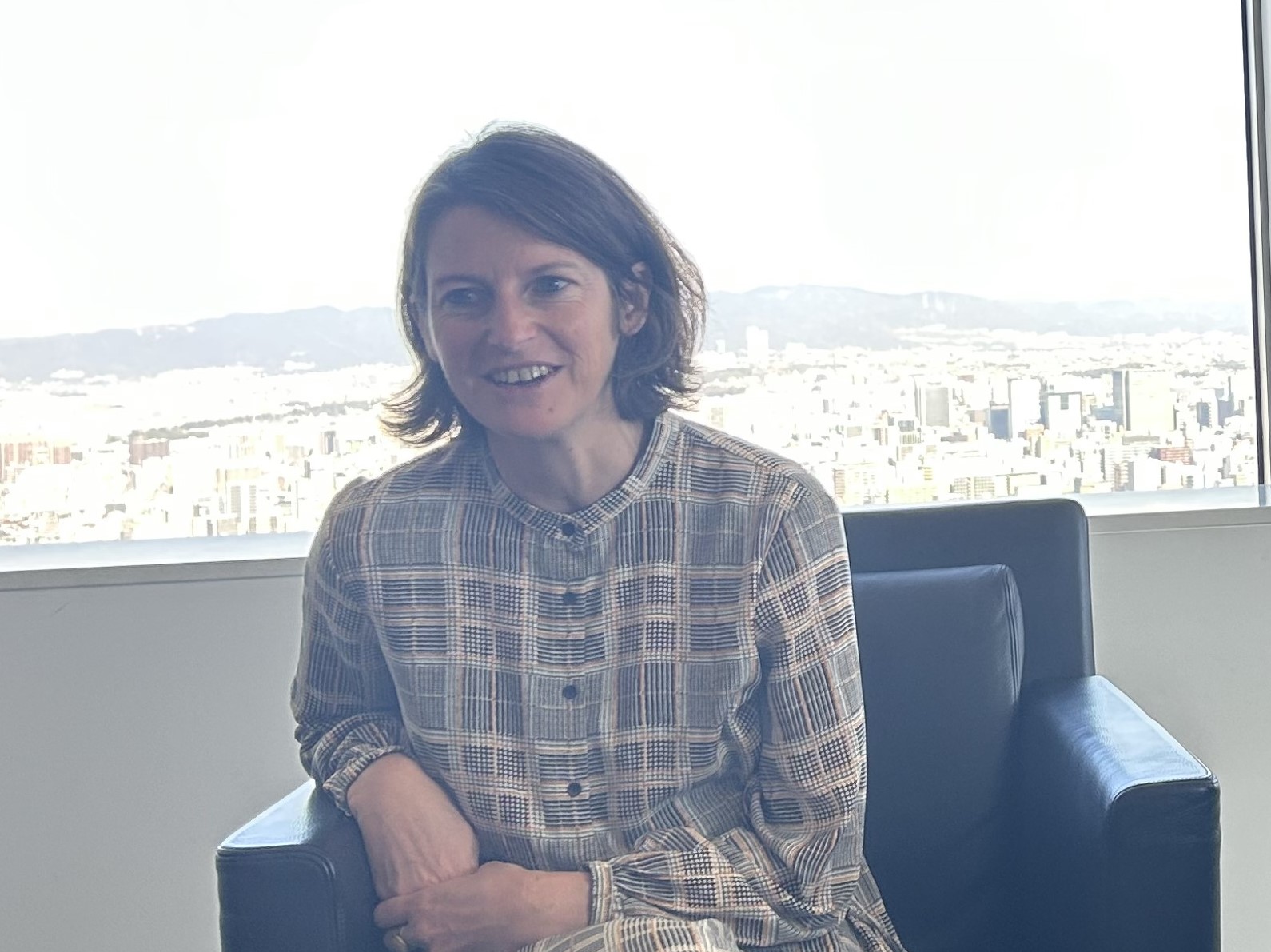
※This article is based on the interview conducted on November, 2025.
※The photographs used on this webpage were obtained from the “Multimedia” page of the official website of the German Pavilion (https://expo2025germany.de/multimedia-en/).
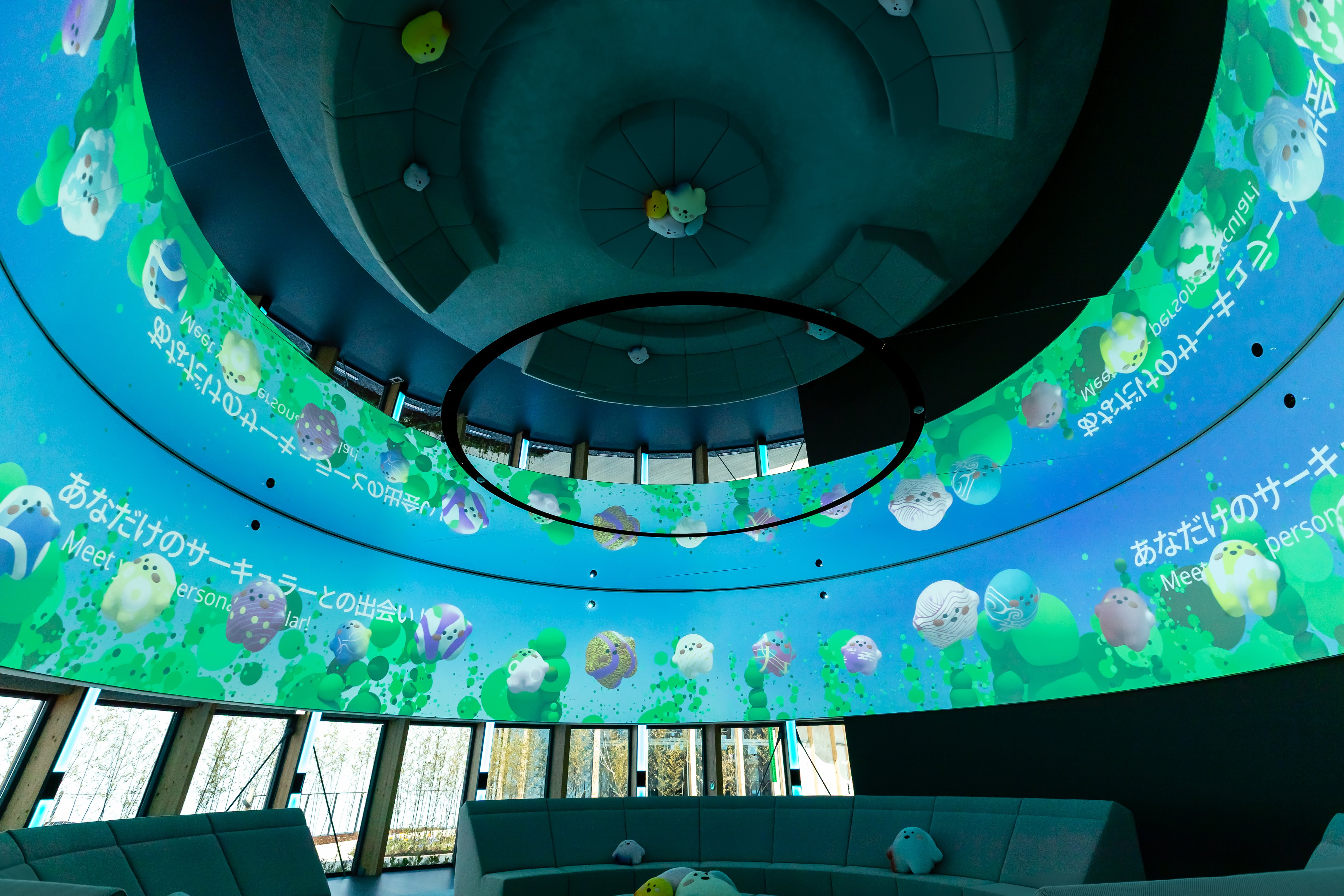
A “Circular” Future Experienced by 3 Million Visitors
Q: What was the most important outcome during the Expo?
We are very proud that Osaka and Kansai managed to have such a successful
Expo. From the very beginning, the venue was filled with energy—the spark
that everyone wanted was clearly visible. Within the Germany Pavilion,
our initiatives highlighted the circular economy, a sustainable future,
and startup-driven innovation. Public engagement far exceeded expectations:
many visitors stayed nearly an hour—double the anticipated 30 minutes—and
in total we welcomed more than three million visitors. We were equally
proud that our pavilion became one of the most popular spaces, and the
mascot “Circular” resonated strongly with audiences in Japan and beyond.
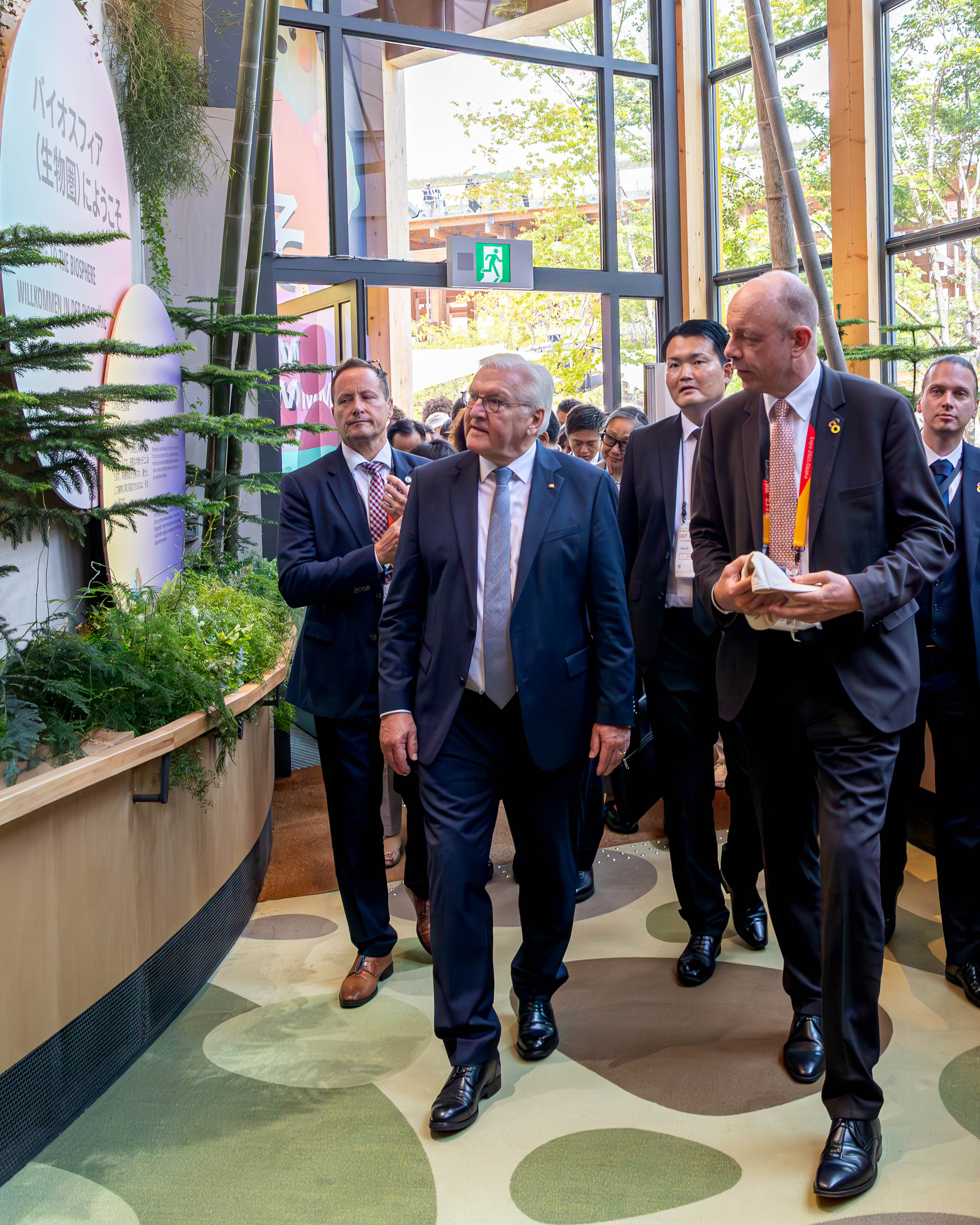
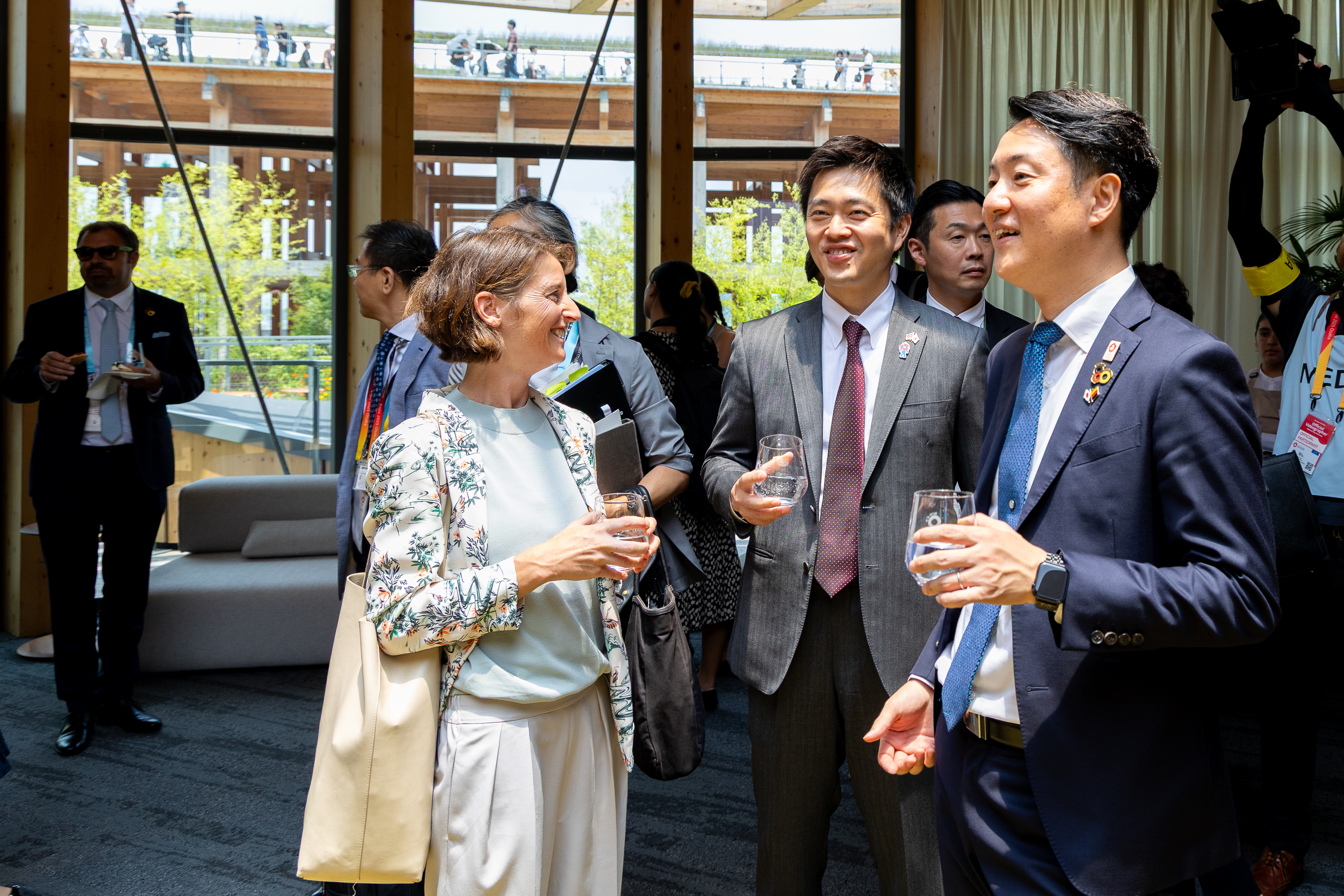
High level engagement was another major achievement. We hosted the Federal President of Germany during our National Day in June and the Federal Foreign Minister in August, each accompanied by substantial business delegations. These occasions also featured a symposium on German–Japanese cooperation in space. On the startup side, the Global Startup Expo was a major highlight, featuring a Berlin delegation led by Senator Franziska Giffey as well as a parallel delegation organized by the Federal Ministry for Economic Affairs and Energy. Regional collaboration also advanced meaningfully: for example, the Minister for Economic Affairs of North Rhine–Westphalia visited Kansai, and an MOU with the Osaka prefecture focusing on energy and related fields was concluded, strengthening interregional and city-to-city ties.
Success Built Before Opening— Behind-the-Scenes Preparation that Underpinned the Pavilion
Q: What background or preparations enabled these outcomes?
A key factor behind our success was the clarity and timing of our communication.
We were one of the first national pavilions to publicly present our concept
of “Wa!Germany”, clearly explaining why we chose this approach for our
participation in EXPO 2025 and how it would resonate with Japanese audiences.
This early and consistent messaging allowed us to build momentum before
the Expo even began.
From the initial application to the BIE onward, the Consulate General served as the “boots on the ground,” providing the pavilion team and German authorities with timely local information on plot selection, permitting, and construction. Before the resident pavilion team fully arrived, our consulate acted as the local operational base, ensuring that practical arrangements advanced smoothly. The pavilion team actively leveraged our presence in Kansai to accelerate their preparations.
As a Consulate General, one of our core missions is to connect the right people—and to ensure “real follow up.” Rather than merely increasing delegation numbers or collecting MOUs, we emphasize targeted, purpose-driven missions that focus on one or two high-impact themes. Delegations are most effective when they set clear goals and bring the right participants, rather than adopting broad, unfocused programs that risk becoming superficial. Our measure of success is whether the right actors meet—and whether collaboration continues after the visit.
Expo as an Accelerator—Opportunities in Life Sciences, Hydrogen, Startups, and More
Q: Do you have plans in Kansai to promote international exchange and business going forward?
Healthcare and life sciences will continue to be a strategic priority.
Kansai has long-standing ties with German life science clusters, and companies
such as Boehringer Ingelheim and Bayer have made significant local investments.
Hubs integrating science and business—such as Nakanoshima Qross—are particularly
attractive for deepening cooperation. In manufacturing sectors where both
Japan and Germany excel—chemicals, machinery, industrial automation, and
robotics—there remains substantial potential. Kansai also shows strong
promise in energy, hydrogen, defense-related industries, and startups,
which are becoming an especially dynamic arena for collaboration.
Beyond the Expo venue itself, we used a wide range of networking opportunities
to connect with Kansai companies across the hydrogen value chain—ranging
from major firms to startups—and these engagements have already led to
tangible partnerships. Looking ahead, Germany is one of the world’s leading
countries for exhibitions and MICE, and we believe that regularly hosting
major international events in Kansai—events comparable to the Global Startup
Expo—could further elevate regional cooperation. By utilizing venues such
as INTEX Osaka, we aim to support the expansion of Kansai’s MICE capabilities
through Germany-related exhibitions.
In short, the Expo significantly deepened Germany–Japan engagement. While
there is always room for improvement, our goal is to ignite the first spark
of collaboration and create the conditions for long-term partnerships between
Kansai and Germany.
Contact Information
Ministry of Economy, Trade and Industry, Kansai Bureau
International Affairs Division
Address: 1-5-44 Otemae, Chuo-ku, Osaka, 540-8535
Phone:+81-6-6966-6031
E-Mail:bzl-kin-kokusaiinfo@meti.go.jp
 PAGE TOP