
HOME >Post-Expo Interview Series with Consulates-General and Consulates in Kansai >MOESNER Felix Michael, Consul of Consulate of Switzerland in Osaka
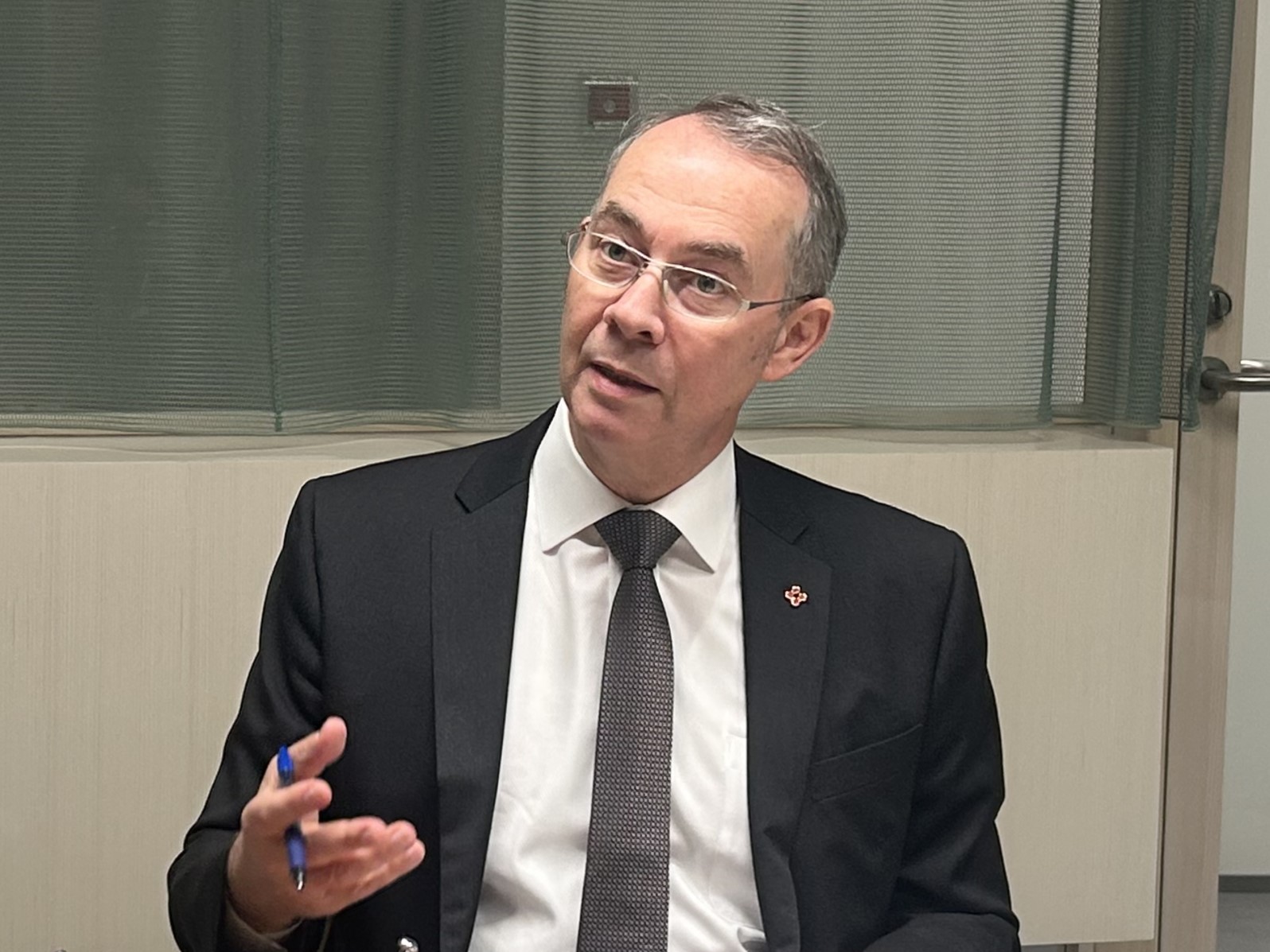
MOESNER Felix Michael, Consul of Consulate of Switzerland in Osaka
Last update:March 4,2026
Expo-Opened Doors—Swiss–Japan Startup Collaboration in Kansai Evolves
※This article is based on the interview conducted on November, 2025.
※The photographs used in this article were provided by the Consulate of Switzerland in Osaka.
Kansai as a Real-World Testbed — Nakanoshima Qross × Wyss Zurich, MOUs Accelerate Collaboration
Q: What was the most important outcome during the Expo?
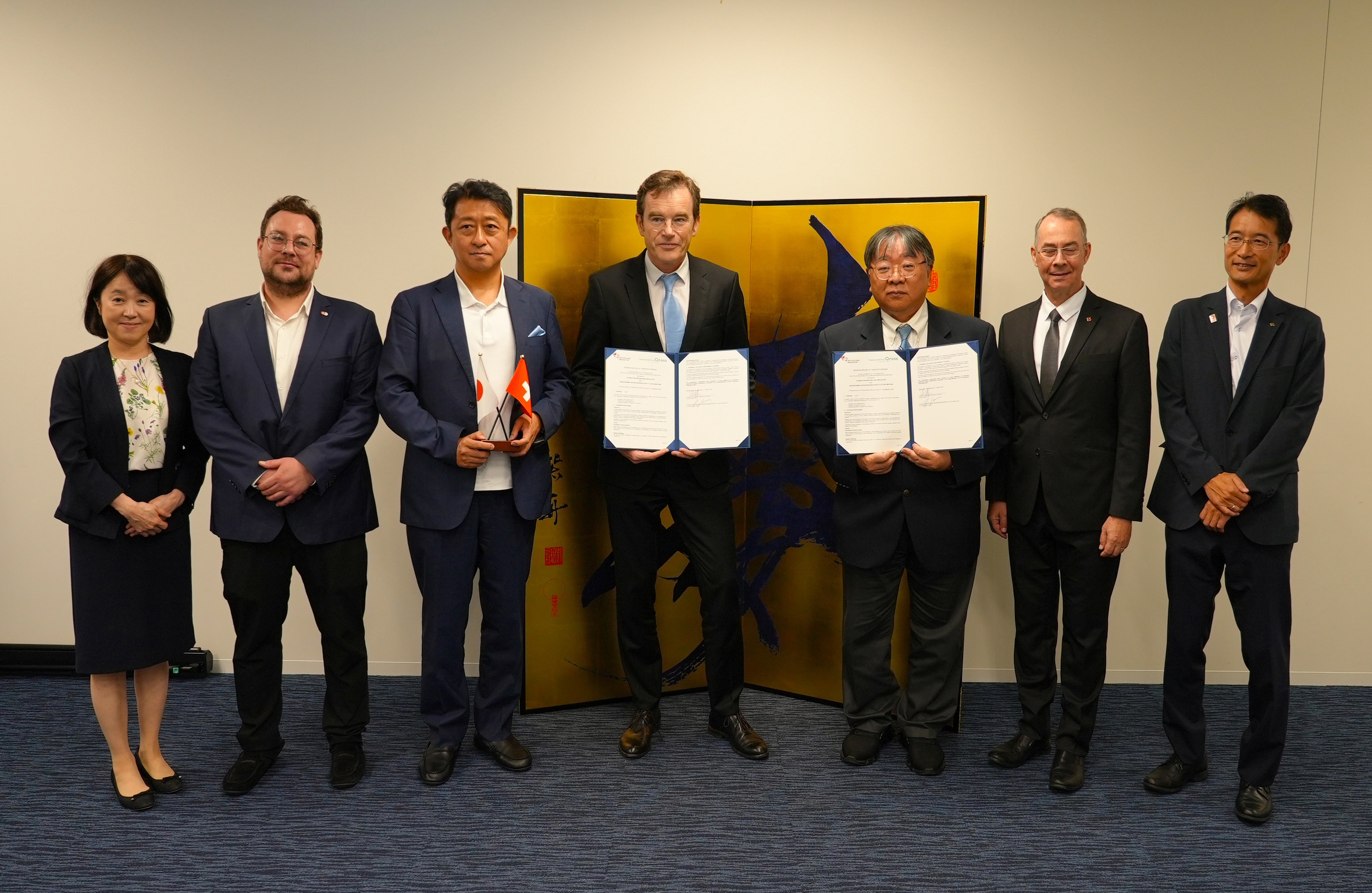
Over the past two years since the Consulate of Switzerland in Osaka began its activities with a particular focus on startup support, we have placed our bets on Kansai as a “real-world testbed” and translated that commitment into tangible outcomes. The most significant achievement during the Expo period was that the collaboration matured into two MOUs with Nakanoshima Qross. This progress was underpinned by the heightened visibility generated by the Expo; as we often noted, it is closely linked to the Expo. On the Expo’s closing day, the agreement with Wyss Zurich was signed in Switzerland, marking a major milestone for both sides.
Through these MOUs, we have been able to offer the very functions needed
to accelerate startup growth in the medical field—functions that Prof.
Yoshiki Sawa, Chair of the Future Medical Promotion Organization (the operating
body of Nakanoshima Qross), had long sought. For Switzerland, the result
is the acquisition of a powerful partner in Kansai’s medical and life-science
ecosystem. The consulate coordinated these efforts and is pleased to have
contributed to forging stronger ties between Switzerland and Kansai in
the important field of regenerative medicine.
(Wyss Zurich: a joint accelerator of ETH Zurich and the University of Zurich
that bridges university-born innovations in regenerative medicine, robotics,
and medical devices/bionics to clinical application and commercialization.)
Leveraging the Expo for Robust Startup Support
Q: What background or preparations enabled these outcomes?
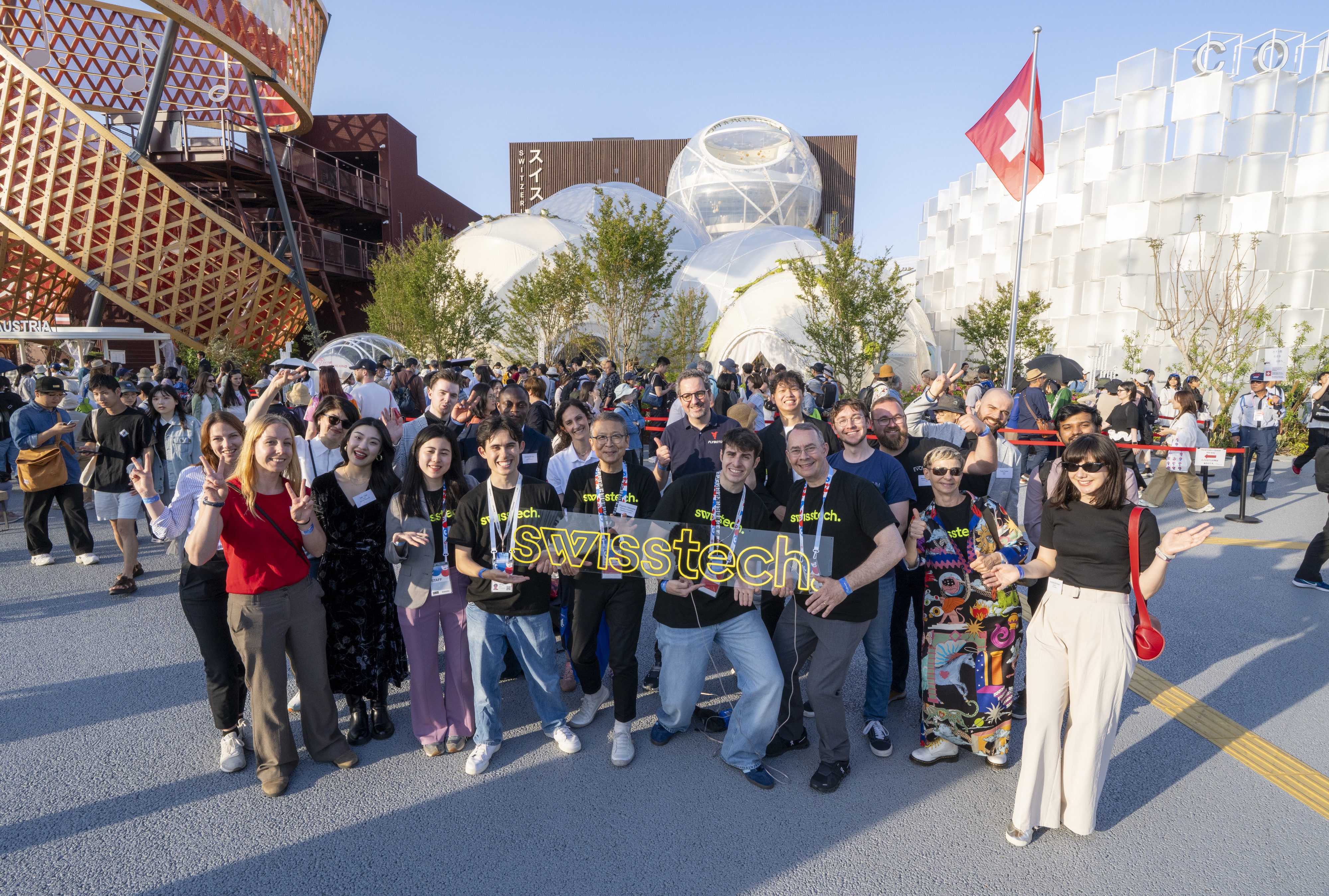
This year, the Consulate’s startup support extended to 98 companies. At Osaka’s healthcare events (“Japan Health” and “Global Health Challenge”), a company introduced by the Consulate was selected as the Best Foreign Startup from among roughly 700 entries. At SusHi Tech Tokyo 2025, we had 10 startups participate, and our pavilion received the Most Innovative Pavilion Award—one of the key SusHi Tech awards. At the Swiss Pavilion during the Expo, we also hosted pitch sessions that enabled concentrated dialogue between Swiss startups, senior corporate executives, and investors. Given the limited venue capacity, we had to focus on quality.
Even before the Expo, we prioritized network building with Kansai companies—conducting
visits to Kyocera, Sysmex, Microsoft AI Co-Innovation Lab Kobe, Takeda,
Nintendo, SCREEN, Murata Manufacturing, and Shionogi—to facilitate the
integration of company site visits into programs for Swiss delegations.
We launched the “Science & Technology Diplomatic Circle,” through which
consuls general, consuls, and other diplomatic colleagues visit a Kansai
site every month. During the Expo, we toured corporate pavilions such as
Sumitomo, Panasonic, and NTT—by design, because we don’t want to create
competition, but we want to connect with corporates. In parallel, we leveraged
the Expo as a platform for innovation—hosting targeted pitch events and
helping open the doors for concrete business follow-ups.
Trust Across Borders: The Key to Startup Co-creation
Q: Do you have plans in Kansai to promote international exchange and business going forward?
Kansai’s defining strength is its ready access to manufacturing floors
and R&D centers—the places where value is actually created. In Kansai,
you can visit production lines, meet engineers as well as innovation and
corporate venture capital (CVC) teams, and—importantly—have discussions
on site, in front of real equipment and prototypes. For Swiss startups,
that proximity and openness are especially valuable.
We intend to increase practical, bilateral pitch opportunities with startups,
recognizing that both Swiss and Japanese startups are busy and will only
participate when the engagements are concrete and meaningful. Specifically,
we plan sector-based cohorts: in January 2026, nanotech and quantum; in
February, new energy. We will also work toward securing opportunities for
Swiss startups to pitch on major Kansai stages such as the STS forum. At
the same time, we aim to broaden our collaboration with Kansai Keizai Doyukai
(Kansai Association of Corporate Executives), OCCI (Osaka Chamber of Commerce
and Industry), JETRO (Japan External Trade Organization), NEDO (New Energy
and Industrial Technology Development Organization), and AIST (National
Institute of Advanced Industrial Science and Technology).
The key is mutual trust: a framework in which trusted counterparts can
casually consult one another—“we have an outstanding startup; could you
connect us with that company?” Kansai’s manageable ecosystem makes such
agile connections feasible. In this sense, Kansai is a hidden champion.
The region hosted the Expo—a world-scale event—and, notably, produced two
Nobel Prize laureates during that period, a clear signal of scientific
excellence. Building on this foundation, we will continue to develop relationships
that enable effective collaboration with institutions and companies across
Kansai.
Contact Information
Ministry of Economy, Trade and Industry, Kansai Bureau
International Affairs Division
Address: 1-5-44 Otemae, Chuo-ku, Osaka, 540-8535
Phone:+81-6-6966-6031
E-Mail:bzl-kin-kokusaiinfo@meti.go.jp
 PAGE TOP