
HOME >Post-Expo Interview Series with Consulates-General and Consulates in Kansai >Marc Kuipers, Consul General of Consulate-General of the Kingdom of the Netherlands in Osaka and Commissioner-General of the Kingdom of the Netherlands at Expo 2025 Osaka Kansai
Marc Kuipers, Consul General of Consulate-General of the Kingdom of the Netherlands in Osaka and Commissioner-General of the Kingdom of the Netherlands at Expo 2025 Osaka Kansai
Last update:March 13,2026
Shaping Tomorrow with the Next Generation — A Circle of Collaboration That Built on Common Ground
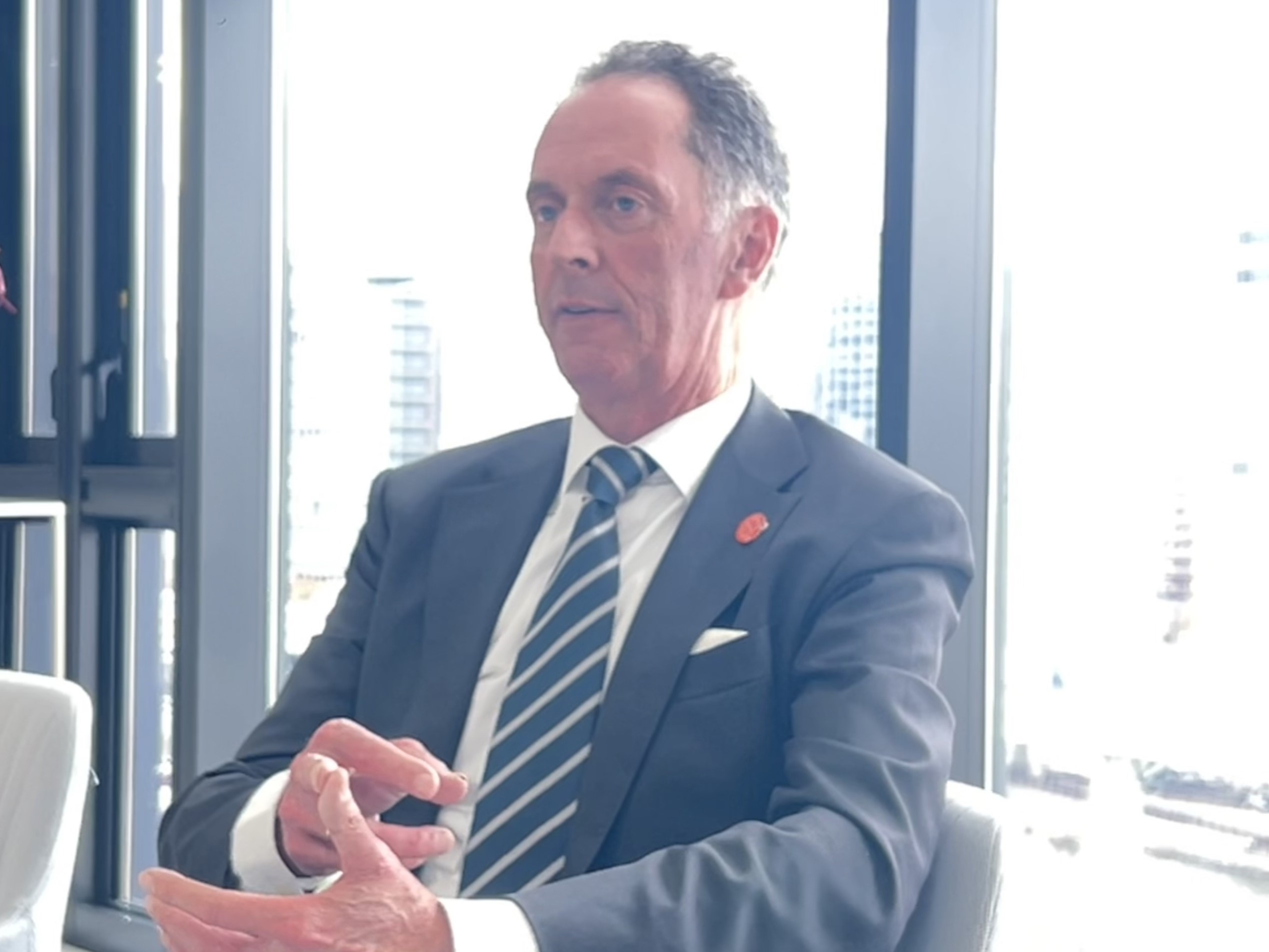
※This article is based on the interview conducted on December, 2025.
※The photographs used in this article were provided by the Consulate-General of the Kingdom of the Netherlands in Osaka.
Inspiring the Next Generation — What the Expo Left as a Path to Success
Q: What was the most significant achievement during the Expo?
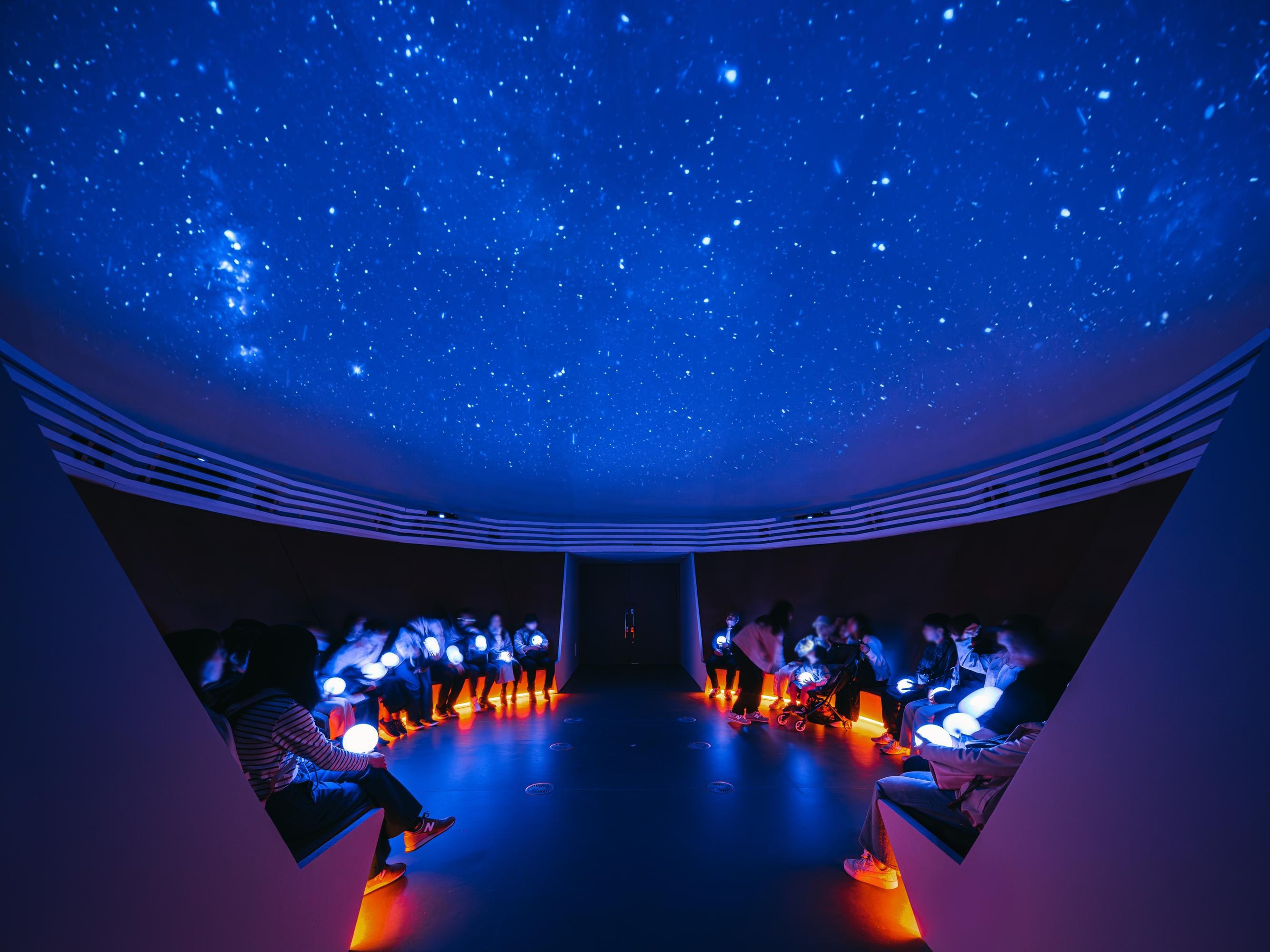
One of the most significant achievements was creating a place where diverse countries and regions from around the world could come together and discuss solutions to future challenges. Today, the world is facing a wide range of global challenges—wars in Europe and the Middle East, climate change, and pandemics—and the next generation can sometimes feel as if ‘the world is falling apart.’ That is precisely why we kept a strong focus on inspiring the next generation. We joined the Expo because we wanted to pass hope on to them: to search for solutions together and to leave a credible path forward.
Our theme was ‘A New Dawn on Common Ground.’ In a world confronting global‑scale challenges, it is difficult for any country to find solutions on its own. That is why we sought cooperation that transcends borders and positions—sharing wisdom, expertise, and ideas. This is what we mean by ‘Common Ground.’ During the Expo, we welcomed 1.2 million visitors, held 143 related events, organized six major missions—including at minister and vice‑minister level—and hosted 17 delegations. In total, more than 350 stakeholders from companies, universities, and other organizations participated, and we believe these engagements strengthened Japan–Netherlands networks. If these connections now become a starting point for joint research and deeper cooperation, they can contribute to addressing global challenges.
Three Moments Etched at the Expo — A Chorus of 10,000, A Night with 30,000 Visitors, and Passing on the Spirit
Q: Could you share any memorable episodes or initiatives from the Expo?
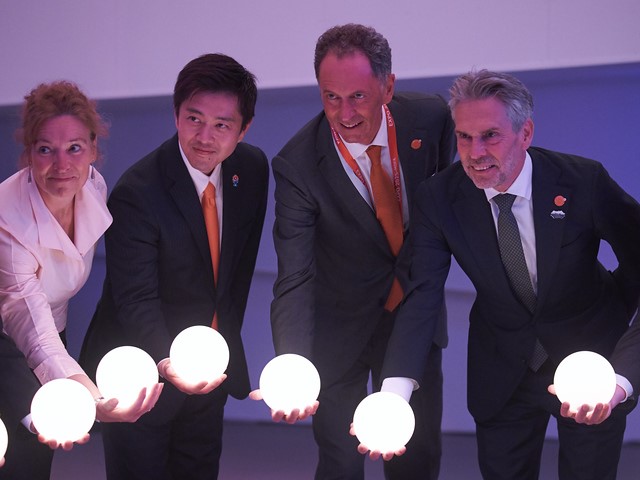
Three moments left the strongest impression on me. The first was the opening-day ceremony. Ten thousand people took part in the “10,000-person Ninth,” a mass chorus of Beethoven’s Ninth Symphony, and a powerful sense of unity emerged— “we are one.” Even in an increasingly divided world, it was a moment when I felt countries truly connected as one, and I thought: “This is the meaning of the Expo. We can do it. We can make it happen.”
The second was 13 August, when parts of the Osaka Metro temporarily stopped. Although all pavilions had already closed, around 30,000 visitors remained on site. Many people were anxious about food and a place to stay. Feeling that we could not leave older people or families with small children outside, we reopened our pavilion and offered our large Miffy statue as a photo spot. Even at 2:30 a.m., hundreds of people were still lining up to take pictures with Miffy. The scene—visitors looking out for one another—was truly special to me.
The third was what happened after the Expo closed. We handed our pavilion
over to the Pasona Group, and it was decided that it would be relocated
to Awaji Island. This meant more than moving a building: it was about entrusting
the theme “A New Dawn on Common Ground,” and the spirit of the Expo, to
the next place and the next generation. Our pavilion was designed by Thomas
Rau, one of Europe’s most visionary architects in sustainable and circular
architecture. He holds the view that “we are not the owners of this planet—we
are merely its guests.” From the outset, we designed the pavilion with
durability and reuse in mind, assuming it would be preserved and given
a second life. I believe this allowed us to realize the Expo’s sustainability
concept in a tangible way.
Kansai–Netherlands Partnership in Focus Sectors: Life Sciences, Green Tech, Food Security, and High-Tech/Digitalization
Q: Are you planning initiatives in Kansai to promote international exchange and business? How do you see areas for collaboration?
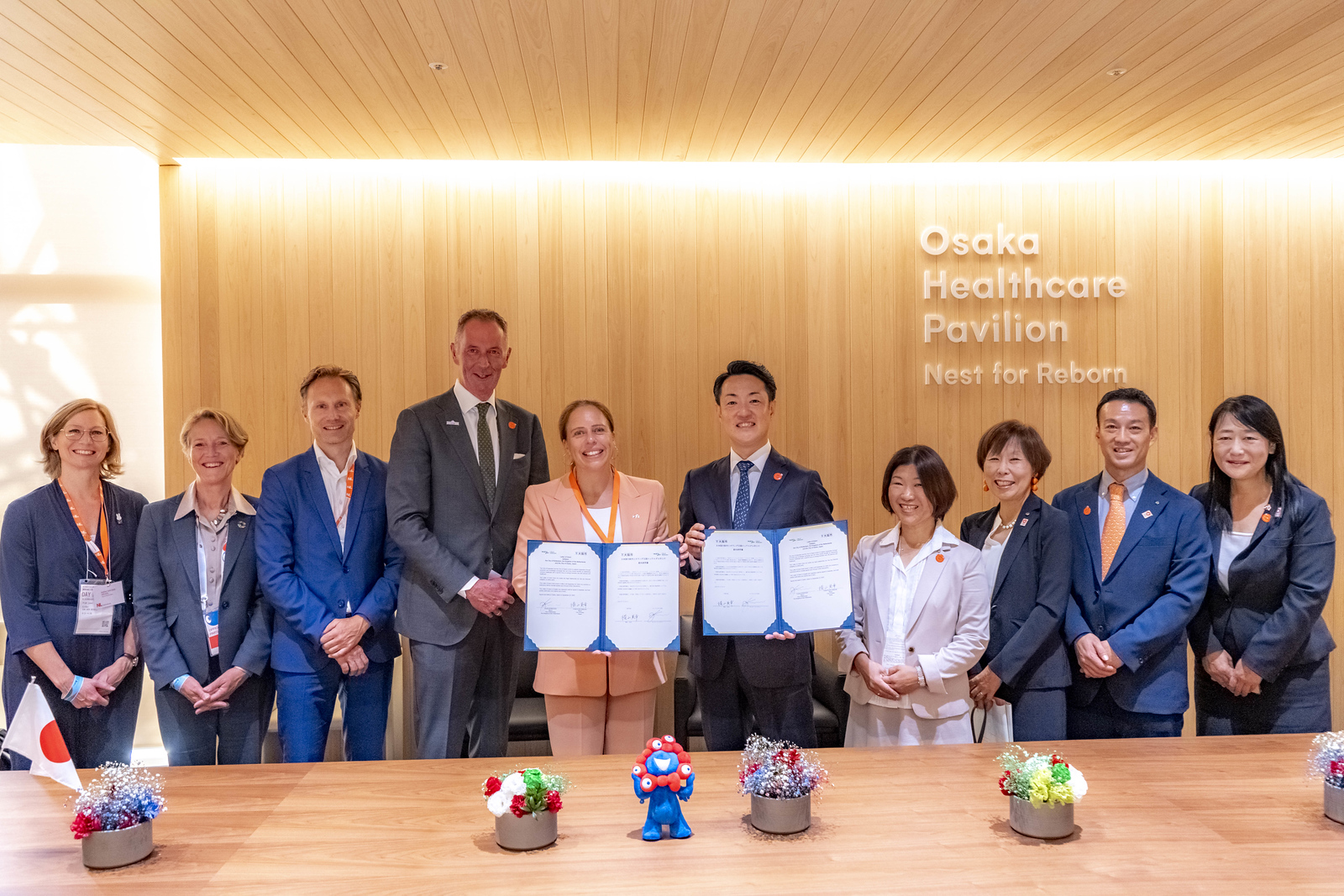
We have a clear strategy going forward. We emphasize five areas: four long‑term priority pillars—life sciences and health; green technology (the energy transition); food security (agri‑food and horticulture); and high‑tech and digitalization—plus culture, which forms the foundation for international exchange.
Kansai has strengths in life sciences and health, green tech, and manufacturing. In particular, it has internationally competitive capabilities in technology development. There are also many globally important research bases, including Osaka University and Kyoto University. These are priority areas for the Netherlands as well, and we believe we can deepen collaboration with Kansai further.
Looking ahead, we hope Kansai will host many international conferences and large‑scale exhibitions and trade fairs—and that major momentum will emerge from them. To achieve that, it is important to take a networked approach rather than work in vertical silos. For example, if a theme week focuses intensively on energy‑related initiatives with multiple countries, linking not only the events themselves but also international conferences held during the same period would build even stronger momentum from Kansai. This should be possible if the Kansai stakeholders who made the Expo a success come together. If such efforts are implemented continuously in Kansai, the benefits for Japan–Netherlands relations—and for the world—will be substantial.
For us, the most important task is to carry the momentum created by the
Expo into the future. In certain fields, Kansai’s potential is among the
strongest in Japan—sometimes even more so than Tokyo. Above all, Osaka
has a “contender” mentality: a willingness to aim for success rather than
simply avoid failure. This differs markedly from the mindset seen in some
other parts of Japan, where the priority is often not to make a big mistake.
We have high expectations for Kansai—open, friendly, and festive by nature—and
we believe there is ample room for further cooperation with the Netherlands
in the years ahead.
Contact Information
Ministry of Economy, Trade and Industry, Kansai Bureau
International Affairs Division
Address: 1-5-44 Otemae, Chuo-ku, Osaka, 540-8535
Phone:+81-6-6966-6031
E-Mail:bzl-kin-kokusaiinfo@meti.go.jp
 PAGE TOP