
HOME >Post-Expo Interview Series with Consulates-General and Consulates in Kansai >David PERDUE, Consul of Consulate of Canada in Nagoya
David PERDUE, Consul of Consulate of Canada in Nagoya
Last update:March 18,2026
Canadian Business Hospitality Meets the Kansai Spirit
※This article is based on the interview conducted on December, 2025.
※The photographs used in this article were provided by the Consulate of Canada in Nagoya.
Redefining the Expo as a Platform for Business Promotion
Q: What was the most important outcome during the Expo?
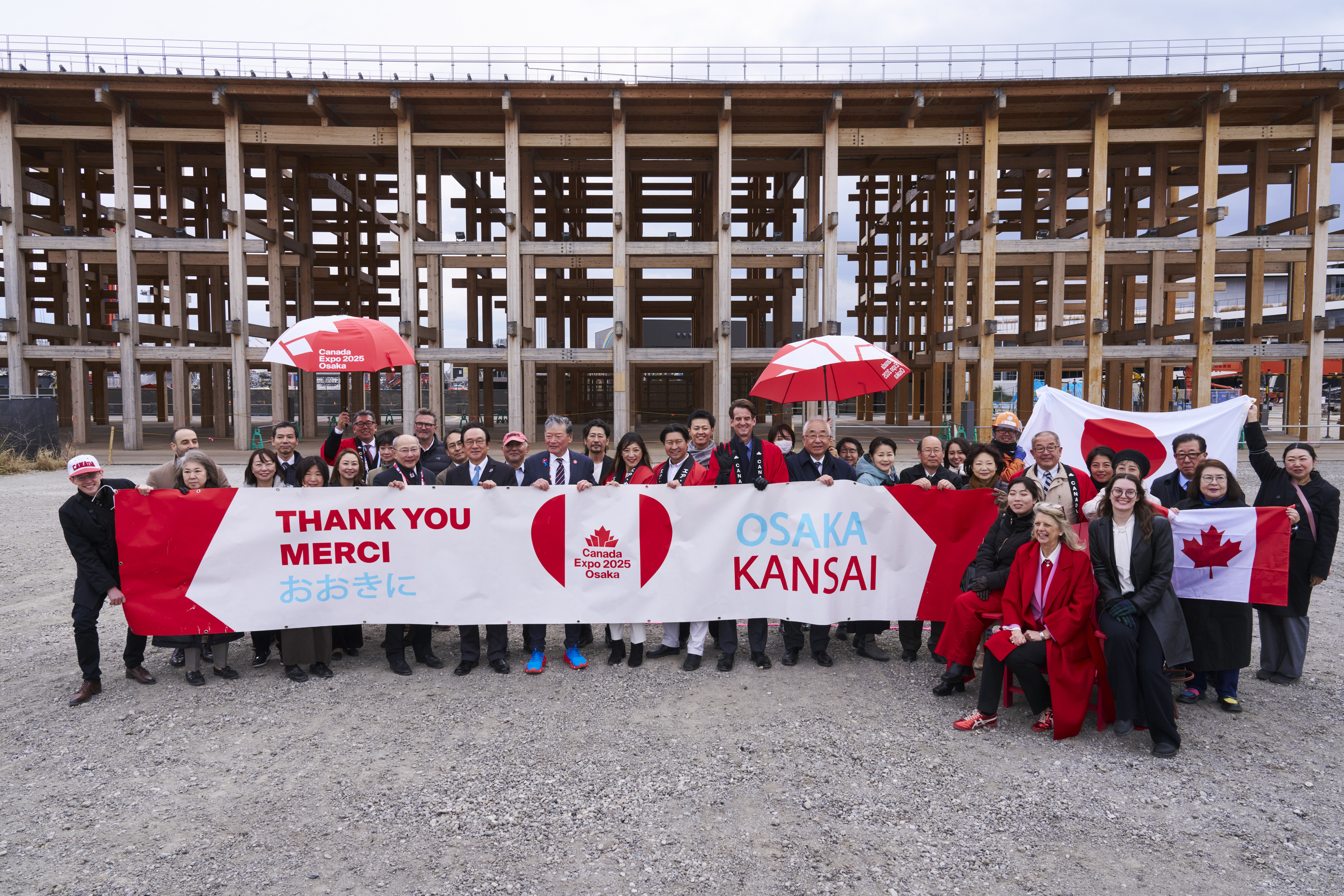
Over the six‑month Expo, our most significant achievement was that we were able to go beyond public‑facing events and position the Expo itself as a venue for business promotion. In Japan, business is rarely concluded in a single visit; success depends on repeated engagement and sustained relationship‑building. With that in mind, we had spent years building networks in Kansai before the opening of the Expo.
As part of these efforts, we helped bring a Government of Canada–led Team Canada trade mission to Osaka, providing roughly 300 participants with a firsthand introduction to the local business environment. This was one of our deliberate approaches to help Canadian companies become familiar with Osaka and encourage them to return during the Expo period. In fact, some delegates did come back to Osaka during the Expo for follow‑up activities.
At first, there were doubts as to whether businesspeople would actually
come to the Expo. However, through cumulative efforts, many business visitors
from within Canada and abroad ultimately did attend. For example, more
than 60 participants joined a multi‑sector trade mission from Atlantic
Canada, including provincial leaders. We also made active use of the Canada
Pavilion as a hospitality venue: a bar‑style area and VIP lounge enabled
special dinners and targeted discussions with individual companies. These
settings proved highly effective for relationship‑building and business
dialogue.
As a result, the Canada Pavilion welcomed 1.5 million visitors and received
a Gold Award for Best Technology Integration, a Silver Award for Best Large
Pavilion as well as a Bronze Award for Exhibition Design in a Large Pavilion.
We believe these awards reflect recognition—across both content and operations—of
our approach to business engagement and hospitality.
Etched in Memory—Linking Generations and Stories
Q: Could you share any memorable episodes or initiatives?
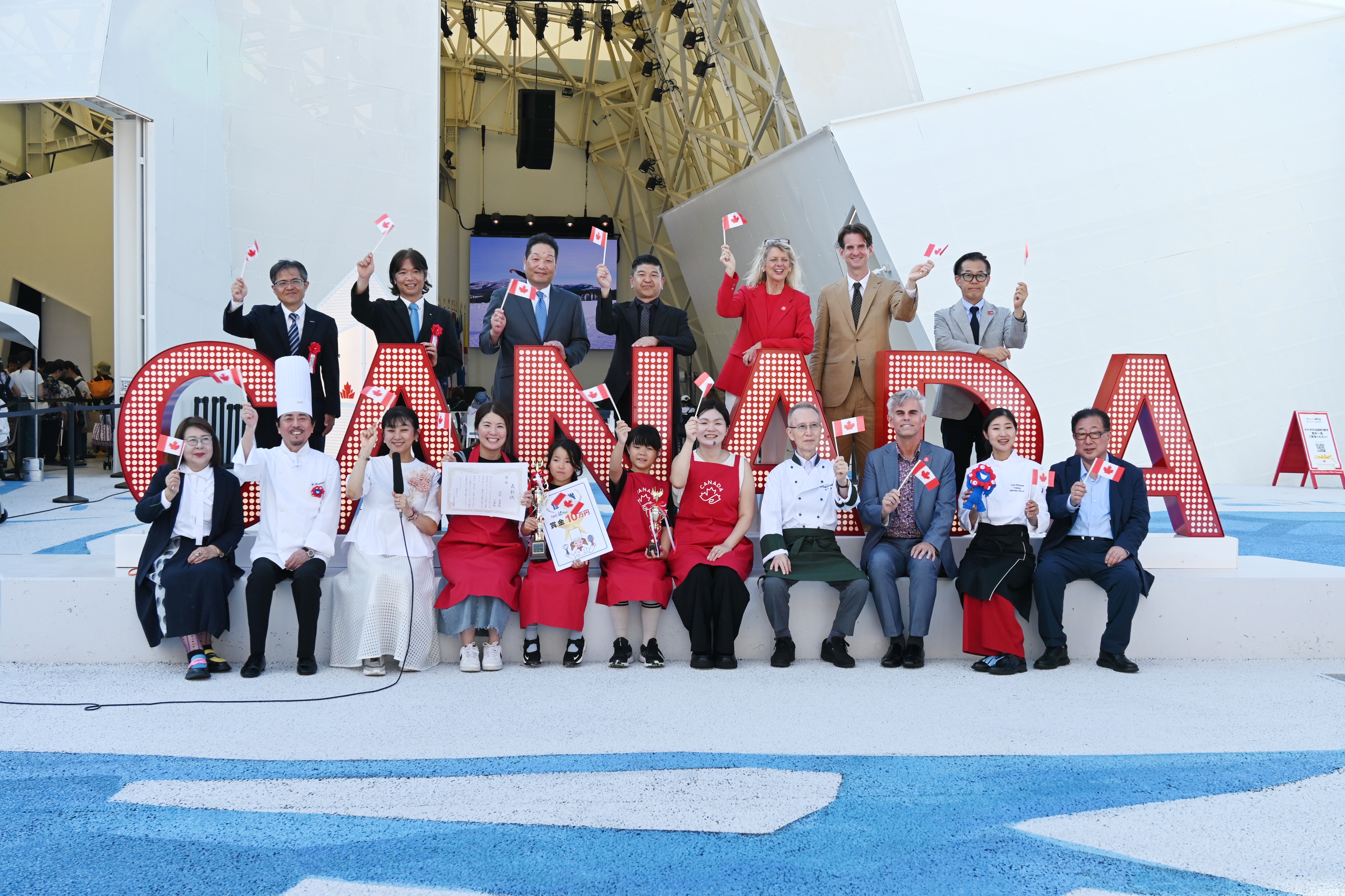
Two moments from the Expo have stayed with us. The first was the awards ceremony of an annual cooking contest we run with Osaka’s Tsuji Wellness Cooking, which we hosted at the Canada Pavilion. As a televised contest, it reaches a wide audience and has long helped us introduce Canadian seafood and agricultural products. This year, a former contestant from three decades ago returned—now as a mother—competing with her child. It gently captured the pavilion’s theme of “Regeneration,” connecting generations through culture and food.
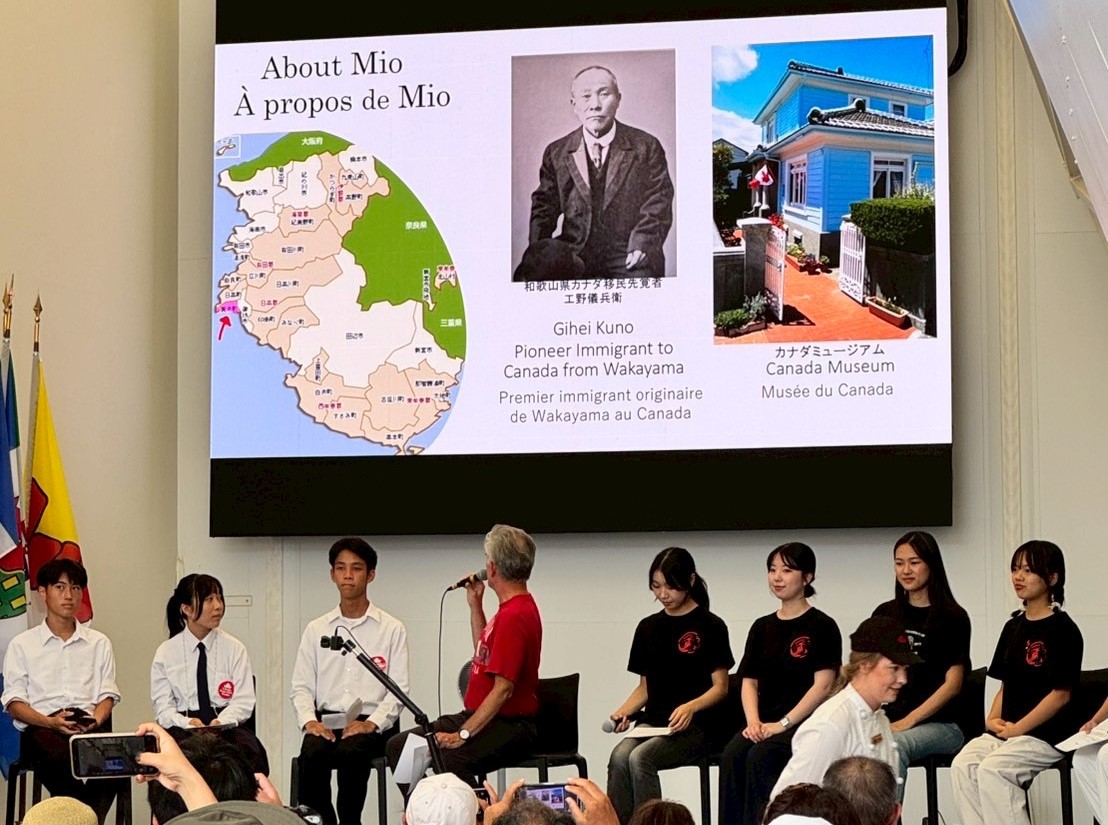
Another moment came from an event at the pavilion that highlighted the
link between Mio, a fishing community in Wakayama, and Canada. From the
Meiji era through the prewar period, about 2,000 people from Mio emigrated
to Canada to work in the fishing industry, and a Japanese-Canadian community
in British Columbia still traces its roots to that village. Inspired by
this history, we invited local stakeholders and university students, and
served a collaborative ramen that combined Wakayama ingredients with Canadian
pork as a symbol of Japan–Canada ties. On stage, the students shared the
story of this history between our two countries, turning the pavilion into
a place where people, culture, and cuisine met in learning and exchange.
We believe that exchanges like these deepen mutual understanding and trust
and—though indirectly—open paths to future business. Economic ties don’t
appear overnight; they take root in shared history, culture, and the relationships
between people. With that perspective, we want to keep valuing how new
ideas and opportunities can emerge from earlier generations and be carried
forward into the future.
Advancing in Kansai—Harnessing Diversity, From Batteries to Creative
Q: Do you have plans in Kansai to promote international exchange and business?
Looking ahead, we plan to focus on several priority sectors: storage batteries—particularly
for EV applications—agrifood, the creative industries, and bio and life
sciences. Through events and seminars, we aim to create additional B2B
opportunities in these areas. Kansai has a particularly strong ecosystem
in the battery sector, centered around companies such as Panasonic Energy
and Prime Planet Energy & Solutions. In the creative industries, collaboration
is also set to deepen, building on the MOU between Québec and the City
of Osaka.
At the same time, Kansai’s regional strengths give us compelling reasons to expand our engagement here. While our usual base in Nagoya and the broader Chubu region is a major manufacturing hub where many Canadian companies operate, Kansai is marked by greater openness and industrial diversity. As Japan’s historical center of commerce, it has a business culture known for strong negotiation skills, practical agility, and a readiness to make things happen—often described to us as a distinctive “Kansai spirit” of getting business done. Building on the complementary strengths of both regions, we intend to form effective partnerships, including missions that link Kansai and Chubu.
A further step in strengthening our foundation in Kansai is the appointment
of a new female Honorary Consul in Osaka. She brings an extensive network
across the region, including connections in academia and other fields.
As the Government of Canada places great importance on supporting women
business leaders, we look forward to working with national and local governments,
the Osaka Chamber of Commerce and Industry, and JETRO to co-design high-quality
meetings and receptions. Through these partnerships, we aim to translate
diversity into a genuine source of strength for future collaboration.
Contact Information
Ministry of Economy, Trade and Industry, Kansai Bureau
International Affairs Division
Address: 1-5-44 Otemae, Chuo-ku, Osaka, 540-8535
Phone:+81-6-6966-6031
E-Mail:bzl-kin-kokusaiinfo@meti.go.jp
 PAGE TOP